
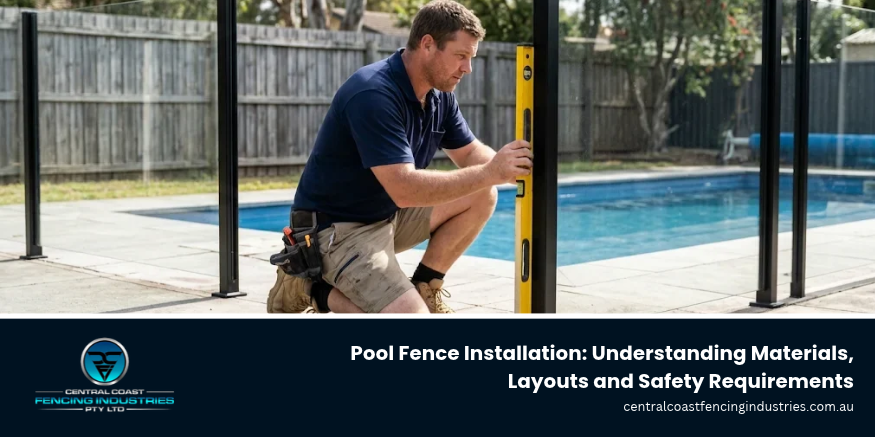
Installing suitable fencing around a residential swimming pool is important for establishing a designated swimming area and maintaining a safe outdoor environment. Beyond safety, the right fencing design can complement the property’s appearance while helping organise different sections of the backyard.
Homeowners planning a new installation or upgrading an existing barrier need to consider factors such as fencing materials, pool dimensions, access points, and applicable safety requirements. For those exploring pool fencing Central Coast, understanding these considerations can help narrow down suitable options.
What Should You Consider Before Installing a Pool Fence?
Before selecting materials or finalising a design, homeowners should evaluate the pool area and understand how the surrounding property may influence the fencing layout. Careful planning helps determine suitable barrier positions, access points, and installation requirements. When considering pool fencing, these initial checks can help homeowners identify practical options that suit their outdoor space.
Assessing Your Pool Area and Surroundings
Start by measuring the pool and checking its shape, position and distance from nearby property features. Gardens, patios, retaining walls, pathways and outdoor structures can affect where the fence can be installed. Changes in ground levels may also influence barrier positioning and the preparation required before work begins.
Identifying Access Points and Everyday Requirements
Consider how household members move around the pool and identify frequently used entry and exit points. Gate locations should support convenient access without compromising safety. Planning these details early helps establish a suitable layout for fence installation.
Understanding Different Materials Used in Pool Fencing in Central Coast
Pool fencing is available in several materials, each offering different visual characteristics, design options, and practical considerations. The right choice depends on the property’s layout, the desired appearance, maintenance preferences, and applicable safety requirements. Understanding these differences can help homeowners select a fence that complements their outdoor space while providing a suitable barrier around the swimming pool.
Glass Pool Fencing
Glass pool fencing is often considered by homeowners who want to maintain clear views across their outdoor areas. Its transparent panels allow visibility around the pool without creating the enclosed appearance of traditional fencing.
Frameless designs use minimal visible hardware, while semi-frameless options incorporate supporting posts between panels. Both styles can complement contemporary landscapes and outdoor entertaining areas. Homeowners exploring glass pool fencing Central Coast can consider how each design will suit their pool’s shape and surrounding features.
Aluminium Pool Fencing
Aluminium is a lightweight material commonly used in outdoor fencing. It is available in different styles, colours and finishes, allowing homeowners to select designs that complement their property’s exterior. Its versatility makes it suitable for various residential settings, from simple backyard layouts to more decorative outdoor spaces.
Tubular Steel Pool Fencing
Tubular steel fencing offers a defined, structured appearance through its vertical bars and framed construction. It can suit different property layouts and provide a traditional fencing style. Homeowners should consider suitable finishes for outdoor exposure and ensure the spacing, height, and overall design meet applicable pool safety requirements before installation.
Choosing a Pool Fence Layout That Suits Your Property
A suitable pool fence layout should account for the swimming pool’s design, surrounding landscape, and everyday access requirements. Rather than following a standard arrangement, homeowners should consider how the barrier will fit within the available space while maintaining the required separation around the pool.
Working Around Pool Dimensions and Shapes
- Rectangular pools: Straight fencing sections can create a straightforward layout, provided the available space allows appropriate panel positioning.
- Curved and irregular pools: These may require more careful planning to accommodate changes in direction and maintain a consistent barrier arrangement.
- Accurate measurements: Assessing the pool’s dimensions and surrounding clearance helps determine panel sizes, spacing, and suitable fence positions.
Considering Ground Levels and Surrounding Features
- Sloping or uneven surfaces: Changes in ground levels can affect how fence panels and supporting posts are positioned.
- Existing structures: Retaining walls, garden beds, patios, and nearby buildings may influence the available installation space.
- Ground assessment: The relationship between the pool edge and surrounding ground levels should be checked to support appropriate barrier positioning.
Planning Gate Locations and Entry Points
- Convenient access: Position gates where household members can reach the pool area without unnecessary obstruction.
- Nearby pathways: Consider how walkways, patios, and outdoor living spaces influence movement around the fence.
- Safety considerations: Gate placement and operation should meet applicable pool safety requirements while supporting everyday use.
Planning Access for Pool Equipment and Maintenance
A pool area needs convenient access for routine cleaning, equipment checks, and maintenance work. Homeowners should consider the following points when planning the fence layout:
● Pool equipment location: Identify where pool pumps, filters, and other equipment are positioned before finalising the fence layout.
● Access for servicing: Ensure the barrier does not unnecessarily obstruct access needed for inspecting or servicing pool equipment.
● Storage areas: Consider how the fencing arrangement will affect access to spaces used for storing pool supplies and maintenance tools.
● Movement of equipment: Allow sufficient space to move cleaning tools and maintenance equipment around the pool area.
● Future maintenance needs: Plan the layout with regular cleaning, equipment replacement, and servicing requirements in mind.
Considering these details early can make the pool area easier to maintain and use.
Understanding Pool Fence Safety Requirements and Regulations
Pool fencing must do more than complement the outdoor space; it must also provide a suitable child-resistant barrier. Before arranging glass pool fencing in central coast , homeowners should understand the relevant safety requirements and check which standards apply to their property.
- Minimum barrier height: In NSW, pool barriers generally need to be at least 1.2 metres high, measured from the finished ground level.
- Correct positioning: The fence must separate the pool from the residential building and adjoining areas. Boundary fences used as part of the barrier generally require a height of 1.8 metres on the pool side.
- Gaps and openings: Gaps beneath the fence and between vertical bars must generally not exceed 100mm.
- Climbable features: Nearby furniture, trees, garden features and horizontal bars should be assessed to maintain the required non-climbable zones.
- Gate operation: Pool gates must open away from the pool, close automatically, and latch securely without manual assistance.
- Regulatory checks: Requirements can vary according to the pool’s construction date and subsequent modifications. Homeowners considering pool fencing Central Coast should check applicable NSW standards, council requirements and inspection procedures before installation.
Preparing Your Property for Fence Installation
Preparing the installation area can help make the fencing process more organised. Start by clearing unnecessary obstacles, garden equipment, and other items from the proposed fence line. Installers may need to check paving, soil conditions, concrete surfaces, and existing structures to determine suitable fixing methods.
It is also important to confirm measurements and identify underground services, such as water pipes or electrical lines, before any groundwork begins. Homeowners should consider whether there is sufficient access for materials, tools, and installation equipment. Addressing uneven surfaces, obstructions, or other site-related issues beforehand can help reduce unexpected adjustments during the project and support a smoother fence installation.
What to Check Before Confirming a Pool Fencing Quote?
Before accepting a pool fencing quote, review what the proposed work includes and whether it accounts for your property’s specific conditions. Check whether the quoted price covers materials, fittings, gate hardware, site preparation, and installation.
Ask whether additional work may be required if installers identify uneven surfaces or existing structural issues. It is also worth clarifying the expected project timeframe and how any changes to the original plan will be communicated. These details can help avoid misunderstandings during the project.
Why Does Fence Installation Matter?
Installing a pool fence involves several practical considerations that influence its positioning, stability, and compliance. Professional installation helps address these requirements through careful planning and fitting.
- Accurate measurements and planning: Different fencing materials require appropriate measurements and fixing methods to ensure the barrier fits the available space.
- Correct panel alignment: Proper alignment, secure fittings, and suitable spacing help maintain the overall stability and arrangement of the fence.
- Adapting to ground conditions: Uneven surfaces, slopes, and nearby structures can influence installation methods and may require adjustments.
- Proper gate fitting: Gates, hinges, and latches need careful installation and adjustment to ensure they operate correctly.
- Attention to safety requirements: Choosing professional fence installation helps homeowners address applicable pool fencing regulations and establish a barrier that meets relevant safety requirements.
Maintaining Your Pool Fence After Installation
Regular inspections can help homeowners maintain their pool fencing and identify potential issues early. Check panels, posts, brackets, and supporting fixtures for loose fittings, visible damage, or signs of wear. Cleaning requirements will vary by material, with glass panels needing occasional cleaning to remove dirt and watermarks.
It is equally important to check gate hinges, self-closing mechanisms, and latches to ensure they continue operating correctly. Any damaged components or loose fittings should be addressed promptly rather than left unattended. For homeowners with glass pool fencing in Central Coast, routine cleaning and checks can help preserve the panels’ appearance while supporting the barrier’s ongoing condition and functionality.
Choosing Central Coast Fencing for Your Pool Fencing Needs
Choosing the right pool fence involves more than selecting an appealing material. Homeowners should consider their property’s layout, pool dimensions, access requirements, and applicable safety standards before deciding on a suitable option. Whether exploring glass, aluminium, or tubular steel designs, careful planning can help identify an arrangement that complements the outdoor space.
Contact Central Coast Fencing to discuss your project, understand the available fencing options, and consider a suitable solution for your property.